
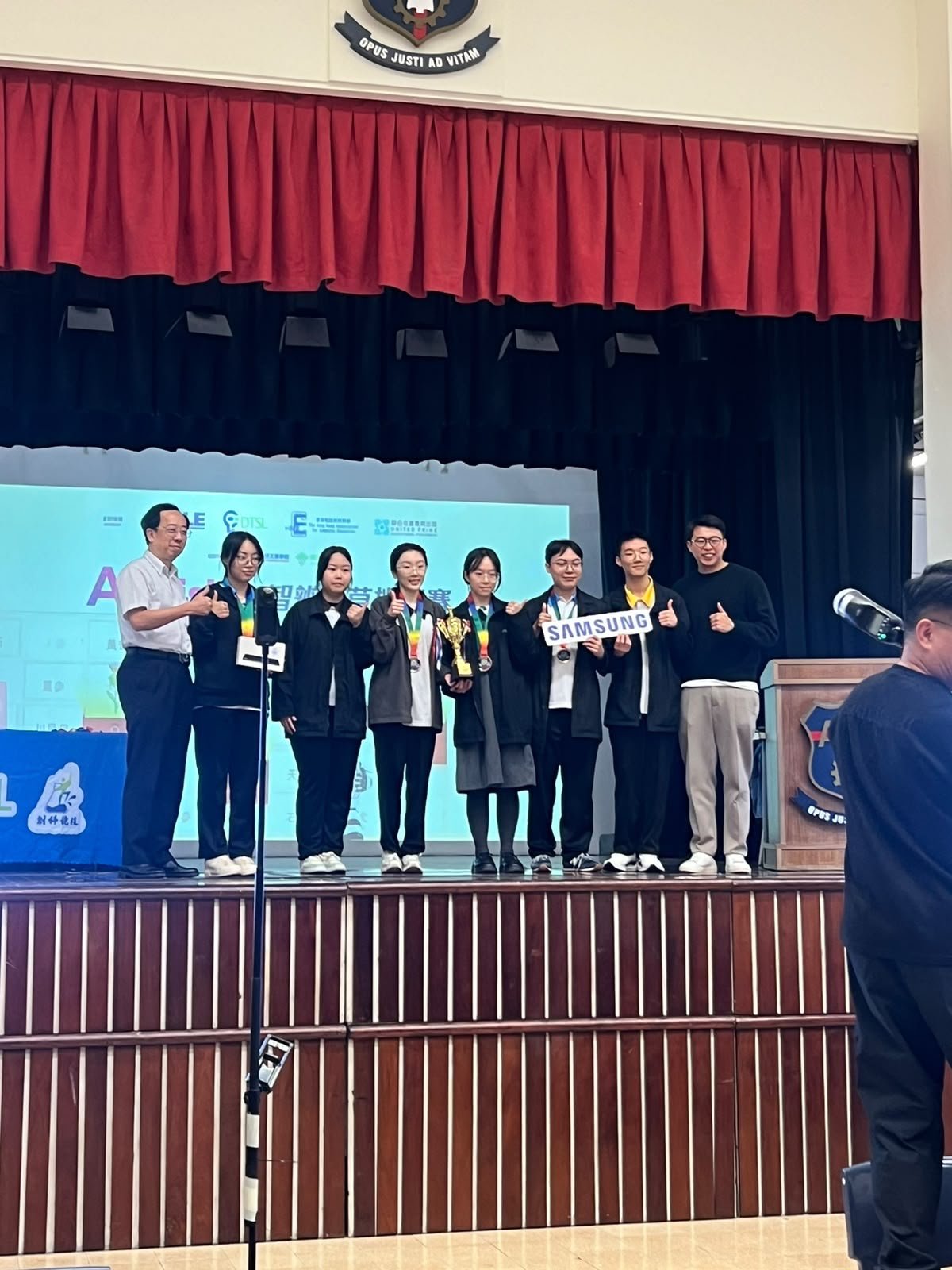
恭喜地利亞修女紀念學校(協和)的隊伍。2026 年 11 月 21 日,第一屆 AI vision 2026 智辨百草挑戰賽的中學組賽事在香港仔工業學校舉行。地利亞修女紀念學校(協和)的隊伍帶回兩個獎項:第一回合的智辨金獎,以及第二回合的百草季軍[4]。Congratulations to the team from Delia Memorial School (Hip Wo). On 21 November 2026, the secondary section of the first AI Vision 2026 Smart Herb Identification Challenge was held at Aberdeen Technical School. A team from Delia Memorial School (Hip Wo) came back with two awards: a Gold Award for recognition in the first round and third place in the herb round[4].
比賽分兩個回合,兩個獎項各自計算。第一回合,隊伍用自行訓練的 AI 鏡頭和單板電腦辨認中草藥實物,每認出一款藥材,換一張「中草藥資源牌」。第二回合是卡牌對決,大會隨機抽出必答題與搶答題,隊伍用手上的資源牌作答;資源牌同時是生命值,用盡所有牌就被淘汰[3]。The contest has two rounds, and the two awards are counted separately. In the first, a team uses a self-trained AI camera and a single-board computer to identify real Chinese herbs, and each herb it recognises earns one herb resource card. The second round is a card duel: the organisers draw open questions and buzzer questions at random, teams answer with the cards they hold, and the cards double as lives, so a team with no cards left is out[3].
這個設計把一場 AI 比賽分成兩部分。第一部分是 AI vision 的基本概念,我們在課堂上講清楚鏡頭怎樣取得影像、模型怎樣從樣本學習,以及學生怎樣判斷一個辨識結果對不對。第二部分是動手的工作,學生設置辨識裝置,收集與分類中草藥樣本,訓練與測試模型,並且決定第二回合怎樣出牌。Edcosys 在這次比賽負責第一部分的基本概念與原理,而第二部分的工作與出賽策略由學生完成。兩個回合各自考甚麼、我們教了甚麼、學生自己做了甚麼,以及一間學校帶隊參賽要準備的四件事,都是這場比賽留下的紀錄。The design splits an AI contest into two parts. The first part is the basic concepts of AI vision: how a camera captures an image, how a model learns from samples, and how a student judges whether a recognition result is right. The second part is the hands-on work: students set up the recognition device, collect and label the herb samples, train and test the model, and decide how to play the second round. Edcosys taught the first part in this entry, and the students completed the hands-on work and the competition strategy. What each round asked, what we taught, what the students did themselves, and the four tasks a school prepares are the record of this entry.
摘要Summary
- 比賽的第一回合用 AI 鏡頭辨認中草藥實物,每認出一款換一張資源牌;第二回合用資源牌應付中草藥卡牌對決。The first round uses an AI camera to identify real Chinese herbs, and each recognised herb earns a resource card; the second round spends those cards in a herb card duel.
- 中學組賽事在 2026 年 11 月 21 日於香港仔工業學校舉行,每隊由 1 至 2 名學生組成,每校最多派 3 隊,費用全免。The secondary section was held at Aberdeen Technical School on 21 November 2026, with one or two students per team, up to three teams per school, and no entry fee.
- 地利亞修女紀念學校(協和)取得第一回合的智辨金獎與第二回合的百草季軍,兩個獎項各自對應一個回合。Delia Memorial School (Hip Wo) took a Gold Award for recognition in the first round and third place in the herb round, and each award names one round.
- Edcosys 教 AI vision 的基本概念與原理,而裝置、樣本、測試與出賽策略由學生完成。Edcosys taught the basic concepts and principles of AI vision, and the students completed the device, the samples, the testing and the competition strategy.
- 學校要準備的是硬件、訓練素材、辨識測試與卡牌回合的練習,一場比賽不能代替一套課程。A school prepares hardware, training material, recognition tests and practice for the card round, and one contest cannot stand in for a curriculum.
智辨百草挑戰賽是一場怎樣的比賽?What kind of contest is the Smart Herb Identification Challenge?
這是一場用 AI 鏡頭辨認中草藥的校際比賽。第一屆由資訊科技教育領袖協會(AiTLE)、樂探索科技集團(DTSL)、香港電腦教育學會(HKACE)與聯合培進教育出版聯合主辦,香港仔工業學校與佛教志蓮小學協辦,小學組與中學組分開比賽[1][2]。中學組在 2026 年 11 月 21 日於香港仔工業學校舉行,每隊由 1 至 2 名學生組成,每校最多派 3 隊,報名費全免[3]。This is an interschool contest that uses an AI camera to identify Chinese herbs. The first edition was jointly organised by the Association of IT Leaders in Education (AiTLE), DTSL, the Hong Kong Association for Computer Education (HKACE) and United Prime Educational Publishing, with Aberdeen Technical School and Chi Lin Buddhist Primary School as co-organisers, and primary and secondary sections run separately[1][2]. The secondary section was held at Aberdeen Technical School on 21 November 2026, with one or two students per team, up to three teams per school, and no entry fee[3].
| 項目Item | 內容Detail |
|---|---|
| 主辦機構Organisers | 資訊科技教育領袖協會(AiTLE)、樂探索科技集團(DTSL)、香港電腦教育學會(HKACE)與聯合培進教育出版聯合主辦。The Association of IT Leaders in Education (AiTLE), DTSL, the Hong Kong Association for Computer Education (HKACE) and United Prime Educational Publishing jointly organise the contest. |
| 協辦學校Co-organising schools | 香港仔工業學校與佛教志蓮小學協辦。Aberdeen Technical School and Chi Lin Buddhist Primary School co-organise the contest. |
| 中學組日期Secondary date | 中學組在 2026 年 11 月 21 日比賽。The secondary section competed on 21 November 2026. |
| 地點Venue | 比賽在香港仔工業學校舉行。The contest was held at Aberdeen Technical School. |
| 隊制Team format | 每隊由 1 至 2 名學生組成,每校最多派 3 隊。Each team has one or two students, and a school may enter up to three teams. |
| 費用Fee | 報名費全免。There is no entry fee. |
| 適用津貼Funding | 比賽列明適用於「智啟學教」津貼。The contest is listed as eligible under the AI for Empowering Learning and Teaching grant. |
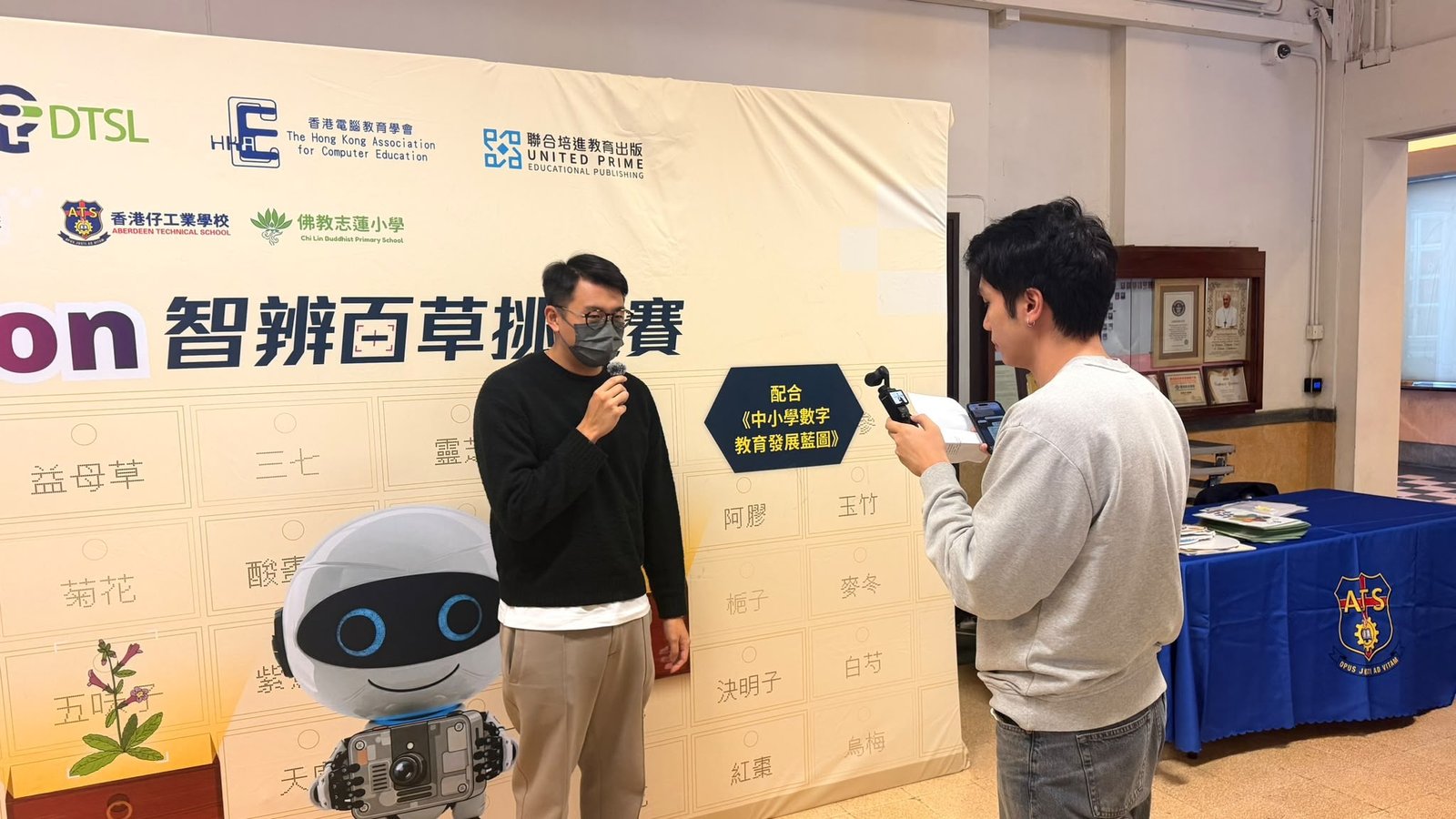
比賽之前,大會安排 AI vision 技術工作坊、香港浸會大學中醫藥博物館參觀,以及李眾勝堂保濟丸廠房參觀。比賽支援包括 AI vision 基礎知識、用 AI 鏡頭製作中草藥辨別裝置、把中醫藥數據轉化為訓練素材,還有中醫藥與資訊素養講座[3]。這些支援說明比賽要的是一個受過訓練的辨識裝置,一個現成的答案不在支援清單上。Before the contest, the organisers ran AI vision workshops, a visit to the Chinese Medicine Museum at Hong Kong Baptist University, and a visit to the Po Chai Pills factory of Lee Kum Sheung. The support covered the basics of AI vision, building a herb-identification device with an AI camera, turning Chinese medicine data into training material, and talks on Chinese medicine and information literacy[3]. The list shows that the contest asks for a trained recognition device; a ready-made answer is not on it.
兩個回合分別考甚麼?What does each round test?
第一回合考辨識,第二回合考怎樣用辨識換回來的資源。第一回合,隊伍用自行訓練的 AI 鏡頭與單板電腦辨認中草藥實物,每成功辨認一款,得到一張中草藥資源牌。第二回合,大會隨機抽出必答題與搶答題,隊伍用手上的資源牌作答;資源牌同時是生命值,用盡所有牌就被淘汰[3]。The first round tests recognition, and the second tests what a team does with the resources that recognition earns. In the first round, a team uses a self-trained AI camera and a single-board computer to identify real Chinese herbs, and each successful identification earns one herb resource card. In the second round, the organisers draw open questions and buzzer questions at random, teams answer with the cards they hold, and the cards double as lives, so a team that uses all of them is out[3].
| 回合Round | 隊伍要做甚麼What the team does | 得到甚麼What it earns | 失去甚麼What it loses |
|---|---|---|---|
| 第一回合:AI 智能辨識Round one: AI recognition | 隊伍用自行訓練的 AI 鏡頭與單板電腦辨認中草藥實物。The team identifies real Chinese herbs with a self-trained AI camera and a single-board computer. | 每認出一款中草藥,隊伍得到一張資源牌。Each recognised herb earns the team one resource card. | 認不出的藥材沒有資源牌,第二回合就少一張牌。A herb the team misses earns no card, so the second round starts with one card fewer. |
| 第二回合:中草藥卡牌對決Round two: the herb card duel | 隊伍回答大會隨機抽出的必答題與搶答題,答案要用手上的資源牌。The team answers open and buzzer questions drawn at random, and each answer spends a resource card. | 答對可以保住優勢,搶答成功可以拉開距離。A correct answer protects the team's position, and a won buzzer question opens a gap. | 每次出牌用掉一張資源牌,牌用盡即被淘汰。Every answer spends one card, and a team with no cards left is eliminated. |
這個設計把辨識準確度變成一種可以帶入下一回合的資源。第一回合認得多,第二回合的容錯就多;第一回合認得少,第二回合每一次出牌都要更準。第二回合同時考中草藥知識與出牌決定,所以一個回合的成績不能直接推斷另一個回合的成績。The design turns recognition accuracy into a resource that travels into the next round. A team that recognises more herbs carries more room for error into the second round; a team that recognises fewer has to make every card count. The second round also tests herb knowledge and decisions about which card to spend, so a result in one round cannot be read straight across to the other.
地利亞的隊伍在第一回合取得智辨金獎,在第二回合取得百草季軍。這個組合說明兩件事:辨識那一半做得好,卡牌那一半也有名次;兩個獎項各自計算,沒有一個數字可以同時代表兩邊[4]。The Delia team took the Gold Award for recognition in the first round and third place in the herb round. The pair makes two points: the recognition half was strong, and the card half still placed; the awards are counted separately, and no single number stands for both[4].
智辨金獎與百草季軍分別說明甚麼?What does each award say?
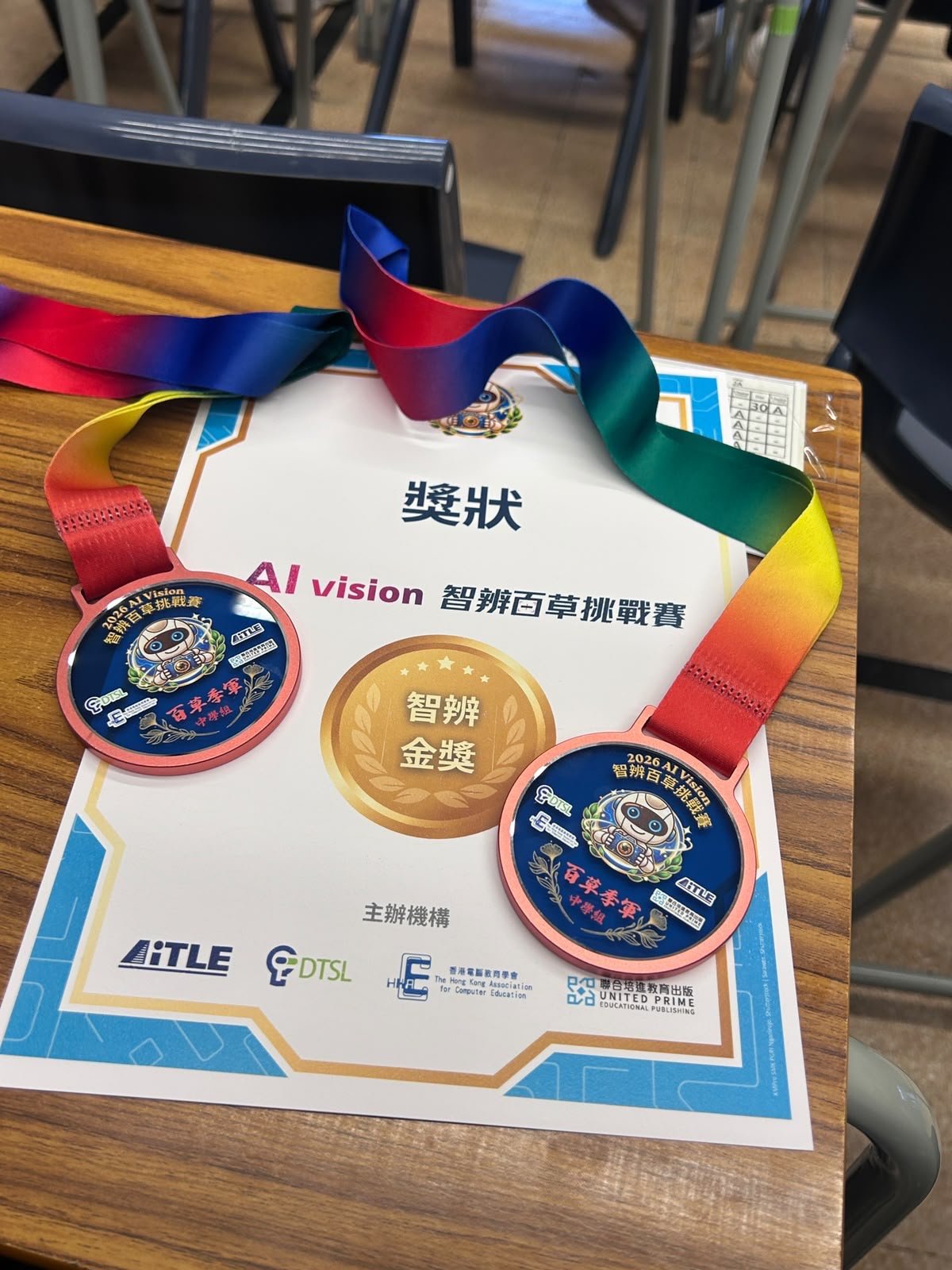
智辨金獎是第一回合的獎項,百草季軍是第二回合的獎項。獎狀中央寫着「智辨金獎」,獎牌上寫着「百草季軍 中學組」,兩件實物各自對應一個回合[4]。把兩個名次分開讀,金獎說明辨識那一半做得好,季軍說明卡牌那一半也走到最後三隊。The Gold Award names the first round and third place names the second. The certificate carries the Gold Award for recognition, and the medals carry third place in the herb round, secondary section, so each item names one round[4]. Read the two results separately: the gold says the recognition half was strong, and third place says the card half reached the last three teams.
這個分別對學校有用。一支隊可以在第一回合認得好,第二回合出牌失誤,成績停在季軍;另一支隊辨識一般,第二回合策略好,也可以靠資源牌走到最後。訓練時把兩個回合分開練,才看得見哪一半需要補。用一個總分評估一支隊,會把兩個回合的錯誤混在一起。The distinction matters to a school. A team can recognise well in the first round, misplay the second and finish third; another team can recognise less and still reach the end on good card decisions. Practising the two rounds separately shows which half needs work. One total score would mix the errors of both rounds together.
獎狀與獎牌上沒有一件寫着「全場總冠軍」,兩件實物都不能用來宣稱全場總冠軍。兩個名次分開讀,金獎不會被讀成季軍的解釋,季軍也不會被讀成金獎的補充。學校把成績寫進報告時,同一個寫法最穩妥:第一回合智辨金獎,第二回合百草季軍,中學組。Neither the certificate nor the medals say overall champion, and neither can be used to claim one. Read separately, the gold does not explain the third place and the third place does not qualify the gold. The safest wording for a school report is the same one: Gold Award for recognition in the first round, third place in the herb round, secondary section.
Edcosys 教了甚麼,學生自己做了甚麼?What did Edcosys teach, and what did the students do themselves?
我們在課堂上教的是 AI vision 的基本概念與原理:鏡頭怎樣取得影像,模型怎樣從樣本學習,以及一個辨識結果為甚麼對、為甚麼錯。學生把這些概念帶回自己的工作裏,自己設置辨識裝置,收集與分類中草藥樣本,訓練與修正模型。出賽策略也由他們決定,包括用哪些藥材、怎樣分工,以及第二回合怎樣出牌。兩邊的分工寫得清楚,成績才不會被說成其中一邊的功勞。We taught the basic concepts and principles of AI vision: how a camera captures an image, how a model learns from samples, and why a recognition result is right or wrong. The students took those concepts into their work, set up the recognition device, collected and labelled the herb samples, and trained and corrected the model. They also decided the competition strategy, including which herbs to use, how to divide the work, and how to play the second round. Writing the division down keeps the result from being credited to one side alone.
| 角色Role | 負責的部分Responsibility |
|---|---|
| Edcosys 導師Edcosys instructor | Edcosys 導師教 AI vision 的基本概念與原理,包括鏡頭、模型與辨識的基本運作。Edcosys instructors taught the basic concepts and principles of AI vision, including how the camera, the model and recognition work. |
| 學生Students | 學生完成辨識裝置的設置、樣本的收集與分類、模型的訓練與測試,選定用哪些藥材,並決定第二回合的出牌策略。Students set up the recognition device, collected and labelled the herb samples, trained and tested the model, chose which herbs to work with, and decided the card strategy for the second round. |
| 比賽The contest | 提供硬件規格、賽前工作坊、場地與兩個回合的規則。Provided the hardware specification, the pre-contest workshops, the venue and the rules of the two rounds. |
一場比賽的成績很容易被寫成課程的成績,但同一套教材交給不同隊伍,會有不同結果。我們教的是基本概念,學生把這些概念變成裝置、測試與出牌,成績也由他們取得。學生在兩個回合之間做的決定,發生在我們的課堂之外,是他們在現場自己下的。把這個分工寫出來,家長和學校才知道他們買到的是甚麼。A contest result is easily written up as a course result, but the same material given to different teams produces different outcomes. We taught the basic concepts; the students turned those concepts into a device, tests and card play, and they earned the result. The decisions the students made between the two rounds happened outside our lessons, and they made them on the spot. Setting that down is how parents and schools can see what they bought.
一間學校帶隊參賽要準備甚麼?What does a school prepare before entering a team?
學校要準備四件事:一組可以訓練的硬件、一批有標籤的中草藥樣本、一套測試辨識的方法、一段練卡牌回合的時間。這四件事按順序做,缺了第二件,第三件就沒有材料可以測;缺了第四件,第一回合賺回來的資源牌會在第二回合用錯。A school prepares four tasks: a set of hardware that can be trained, a labelled set of Chinese herb samples, a method for testing recognition, and time to practise the card round. They run in order. Without the second, the third has nothing to test; without the fourth, the cards earned in the first round are spent badly in the second.
- 硬件:AI 鏡頭要支援自行訓練的模型,單板電腦要能跑積木或 Python,並輸出中文顯示[3]。學校可以用大會提供的訂購表格,也可以用已有的裝置。Hardware: the AI camera has to support a self-trained model, and the single-board computer has to run block-based code or Python and output Chinese text[3]. A school can use the order form the organisers provide or hardware it already holds.
- 訓練素材:把中草藥實物拍成相片,按藥材名稱分類,每款要有不同角度、光線與背景。樣本的多樣性決定辨識的天花板,補拍比換模型更有效。Training material: photograph the real herbs, label them by name, and cover different angles, lighting and backgrounds for each one. The variety of the samples sets the ceiling on recognition, and more photographs help more than a different model.
- 測試:把樣本分成訓練與測試兩批,記錄哪幾款最容易混淆,再補拍那些藥材。測試要用的相片不能同時用來訓練,否則分數只說明模型記住了那幾張圖。Testing: split the samples into a training set and a test set, record which herbs are confused most often, and photograph those herbs again. A test photograph cannot also be a training photograph, or the score only shows that the model remembers that image.
- 卡牌回合:學生要溫習中草藥知識,並且練習在資源有限時決定答哪一題、用哪一張牌。這一段沒有工作坊,要靠隊伍自己排時間。The card round: students revise Chinese herb knowledge and practise deciding which question to answer and which card to spend when resources are short. No workshop covers this part, so the team has to make the time.
大會的支援覆蓋硬件與一部分訓練素材:工作坊教 AI vision 與 AI Camera,博物館與藥廠參觀補中草藥知識[3]。辨識測試與卡牌練習留給隊伍。技術課要留時間做的,是辨識測試:學生自己拍、自己分類、自己測試,才會知道模型的限制在哪裏。卡牌回合的練習由隊伍自己安排,他們才會知道在資源有限時哪一張牌值得用。The organisers' support covers the hardware and part of the training material: the workshops teach AI vision and the AI camera, and the museum and factory visits add herb knowledge[3]. Recognition testing and card practice are left to the team. A technical lesson has to make room for recognition testing: students photograph, label and test the samples themselves, which is how they learn where the model fails. The team arranges its own practice for the card round, which is how it learns which card is worth spending when resources are short.
一場比賽接得上課堂,也取代不了一套課程A contest connects to the classroom, and it cannot replace a curriculum
這場比賽把科學、數學、電腦與中華文化放在同一個任務裏。初中科學用生物分類的特徵觀察中草藥實物,初中電腦用積木或 Python 把辨識結果輸出到單板電腦,數學在卡牌回合計算出牌風險與機率,中華文化補上中草藥的名稱、用途與背景[3]。一間學校要交一份跨學科活動,這場比賽正好把四個科目接在同一件事上。The contest puts science, mathematics, computing and Chinese culture into one task. Junior secondary science uses the features of biological classification to observe real herbs, junior secondary computing uses block-based code or Python to send recognition results to a single-board computer, mathematics weighs the risk and probability of a card, and Chinese culture adds the names, uses and background of the herbs[3]. A school that has to show one cross-curricular activity can connect four subjects in one event.
| 學科Subject | 比賽裏對應的部分Where it appears in the contest |
|---|---|
| 初中科學Junior science | 學生用生物分類的特徵觀察中草藥實物。Students observe real herbs through the features of biological classification. |
| 初中電腦Junior computing | 學生用積木或 Python 把辨識結果輸出到單板電腦。Students send recognition results to a single-board computer in block-based code or Python. |
| 數學Mathematics | 學生在卡牌回合計算出牌風險與機率。Students weigh the risk and probability of a card in the second round. |
| 中華文化Chinese culture | 學生認識中草藥的名稱、用途與文化背景。Students learn the names, uses and cultural background of Chinese herbs. |
對正在規劃「智啟學教」的學校,這場比賽是一個可以寫進計劃的活動:它有明確日期、有硬件要求、有學生作品、有比賽結果[3]。但它只收 1 至 2 人一隊、每校最多 3 隊,受益的是少數學生。把比賽當成課程的終點,大部分學生會留在外面;把比賽當成課程裏的一個任務,它才做到它做得到的事。For a school planning its AI for Empowering Learning and Teaching programme, the contest is an activity that can go into the plan: it has a fixed date, a hardware requirement, student work and a result[3]. It also takes one or two students per team and up to three teams per school, so the benefit reaches a small group. Treated as the end of a curriculum, it leaves most students outside; treated as one task inside a curriculum, it does what it can.
限制也要寫在計劃裏。比賽日期固定,硬件要預先買,學生要課後留時間練習,學校要有一位老師願意帶隊。四樣缺一樣,報了名也組不成一支可以出賽的隊。這些條件寫在報名前一頁,學校就不會在十一月才發現時間不夠。The limits belong in the plan too. The date is fixed, the hardware has to be bought in advance, students have to stay after school to practise, and a teacher has to be willing to lead the team. Miss one of the four and an entry does not become a team that can compete. Put those conditions on the page before the entry form, and a school will not discover in November that the time has run out.
常見問題Questions
比賽要買甚麼硬件?What hardware does the contest require?
一隊幾多人,學校最多派幾隊?How many students are on a team, and how many teams may a school enter?
智辨金獎和百草季軍分別是甚麼?What are the Gold Award for recognition and third place in the herb round?
沒有 AI 底子的學校可以參加嗎?Can a school with no AI background enter?
比賽和「智啟學教」津貼有甚麼關係?How does the contest relate to the AI for Empowering Learning and Teaching grant?
一場比賽要練多久?How long does a team need to prepare?
下一步Where to go next
相關文章Related articles

黃浩然(Michael Wong)Michael Wong (Ho-yin)
黃浩然(Michael)是 Edcosys Limited 的創辦人兼行政總裁。Edcosys 由香港科學園的一支 AI 團隊於 2024 年 5 月 20 日創辦,為企業團隊提供 AI 培訓、到場導入與部門自動化,並為本港中、小學提供到校 AI 課程。Michael Wong is the founder and CEO of Edcosys Limited. Edcosys was founded on 20 May 2024 by an AI team from Hong Kong Science Park. It runs AI training, on-site implementation and department automation for companies, and on-campus AI programmes for Hong Kong primary and secondary schools.
關於作者與團隊 →About the author and the team →資料來源Sources
- 資訊科技教育領袖協會(AiTLE,2026-05-22)「AI Vision 2026 智辨百草挑戰賽」活動頁。文中引用:比賽對象為小學及中學學生;學生學習訓練「AI Camera」辨識指定中藥材;比賽前有一系列參觀和 AI 視覺工作坊;正式比賽在 2026 年 11 月上旬,頒獎典禮暨分享會在 11 月下旬。aitle.org.hkAssociation of IT Leaders in Education (AiTLE, 22 May 2026). Event page for AI Vision 2026. Used here: the contest is for primary and secondary students; students learn to train an AI camera to recognise assigned Chinese herbs; a series of visits and AI vision workshops runs before the contest; the contest itself is in early November 2026 and the prize presentation and sharing session in late November. aitle.org.hk
- 聯合培進教育出版(2026-11)「第一屆 AI vision 2026 智辨百草挑戰賽」得獎名單(小學組)。文中引用:第一回合(智辨)與第二回合(百草)各自設獎,兩個回合的獎項名稱不同。這一頁只用小學組的名單說明兩個回合的獎項結構,不把小學組的成績當成中學組的成績。upephk.comUnited Prime Educational Publishing (November 2026). Award list for the first AI Vision 2026 Smart Herb Identification Challenge, primary section. Used here: the first round on recognition and the second round on herbs each carry their own awards, and the two sets of awards are named differently. This page uses the primary list only to show the award structure of the two rounds, and does not treat a primary result as a secondary result. upephk.com
- 「AI vision 2026 智辨百草挑戰賽」比賽章程(2026-08-06,共 3 頁)。文中引用:中學組比賽日期為 2026 年 11 月 21 日,地點為香港仔工業中學;每隊由 1 至 2 位學生組成,每校最多 3 隊,費用全免;第一回合為 AI 智能辨識,隊伍用自行訓練的 AI 鏡頭及單板電腦辨識中草藥實物,每成功辨識一款得到一張中草藥資源牌;第二回合為中草藥卡牌對決,大會隨機抽必答題與搶答題,資源牌同時是生命值;比賽支援包括 AI vision 基礎、AI Camera 製作、中醫數據轉化與講座;硬件要求為支援自訓練模型的 AI 鏡頭與可跑積木或 Python 的單板電腦;獎項為冠亞季軍獎盃。upephk.com (PDF)Rules of AI Vision 2026, dated 6 August 2026, three pages. Used here: the secondary section competes on 21 November 2026 at Aberdeen Technical School; one or two students per team, up to three teams per school, no fee; the first round is AI recognition, in which a team uses a self-trained AI camera and a single-board computer on real herbs and each recognised herb earns one resource card; the second round is a herb card duel with open and buzzer questions drawn at random, and the cards are also lives; support covers AI vision basics, building the AI camera, turning Chinese medicine data into training material and talks; the hardware is an AI camera that supports a self-trained model and a single-board computer that runs block-based code or Python; and the awards are trophies for champion, first runner-up and second runner-up. upephk.com (PDF)
- 獎狀與獎牌照片(2026-11-21),由地利亞修女紀念學校(協和)提供,並獲學校同意在本網站刊載。文中引用:獎狀中央寫「智辨金獎」,獎牌寫「百草季軍 中學組」;兩件實物都沒有寫「全場總冠軍」。照片檔存於本頁的媒體資料夾。Photographs of the certificate and medals, 21 November 2026, supplied by Delia Memorial School (Hip Wo) and published on this website with the school's permission. Used here: the certificate carries the Gold Award for recognition, the medals carry third place in the herb round, secondary section, and neither item names an overall champion. The files sit in this page's media folder.